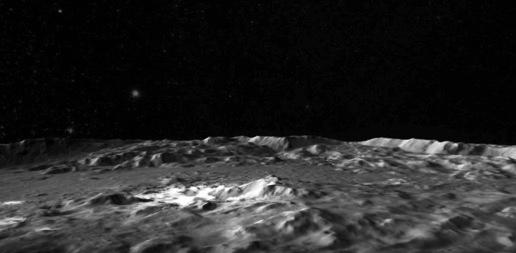
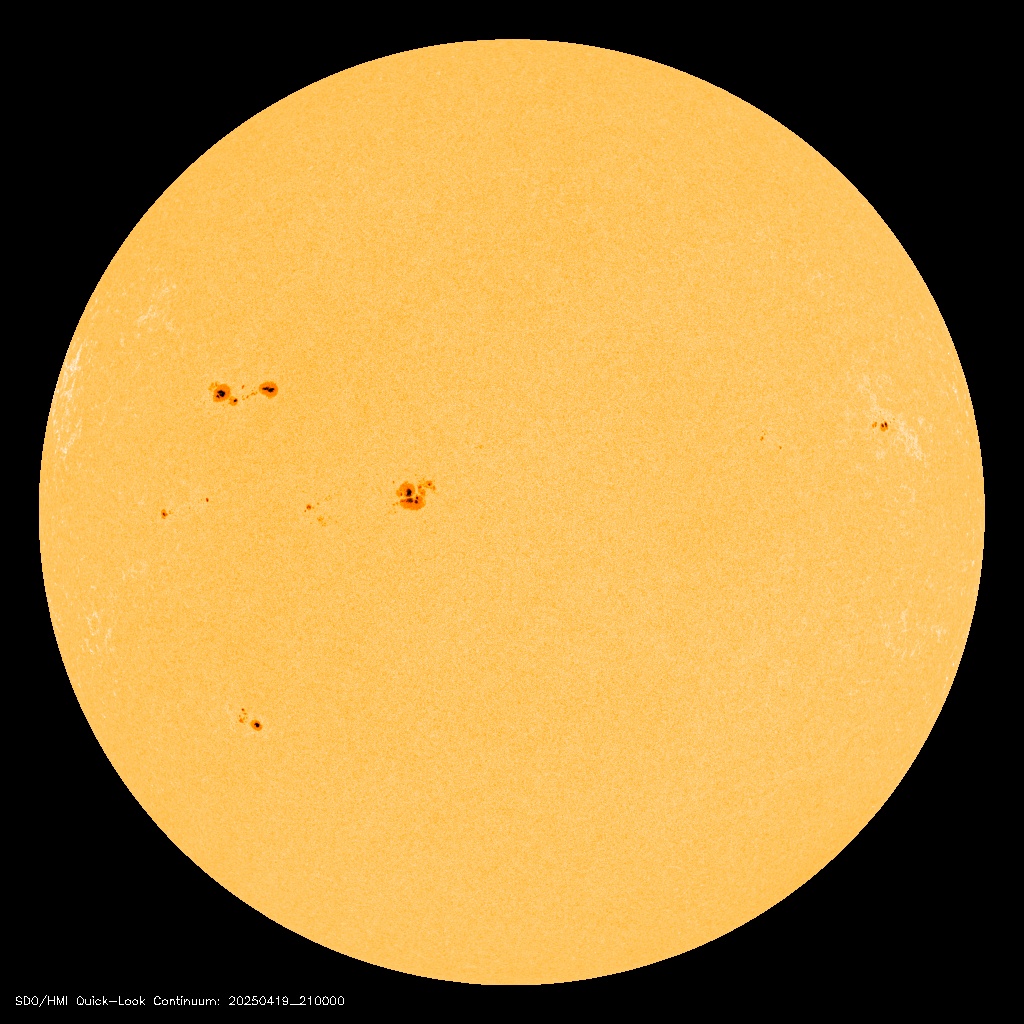
The Sun is not "on fire" in the combustion sense — it's a nuclear fusion reactor, fusing 620 million tonnes of hydrogen into helium every single second. That process releases the energy that makes life on Earth possible. At its current rate of consumption, the Sun has enough hydrogen to keep going for roughly 5 billion more years.
The Sun isn't static. Its surface is covered in plasma loops, sunspots, and explosive flares that can release as much energy as a billion nuclear bombs in a few minutes. Solar activity follows an 11-year cycle. During solar maximum (the next peaks around 2025–2026), increased solar wind can disrupt GPS signals, power grids, and satellite orbits — and create aurora as far south as Florida.
What we still don't know
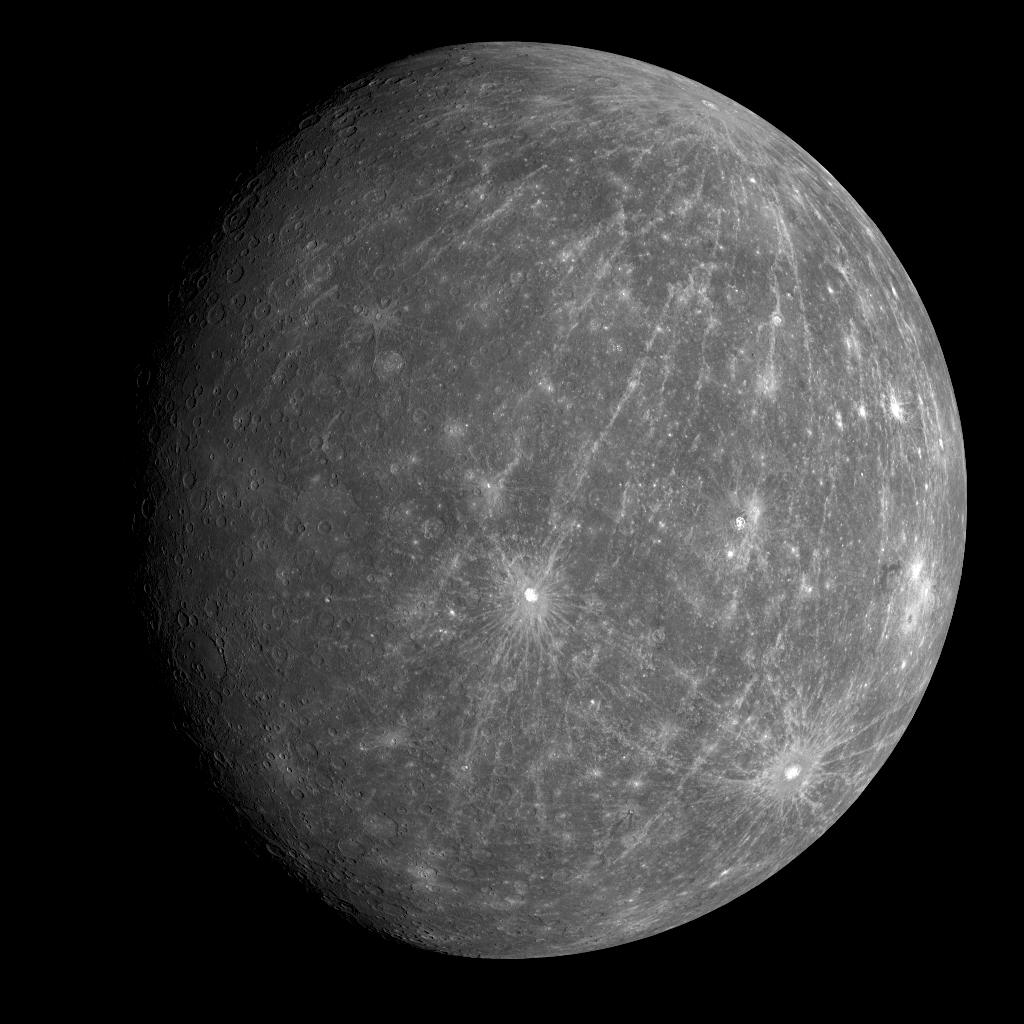
Mercury looks like Earth's Moon but behaves like nothing else. It's the smallest planet, yet has one of the largest iron cores — taking up 85% of its interior. That disproportionate core generates a magnetic field 100× weaker than Earth's, but the fact it has one at all is still a mystery, given how slowly it rotates.
One of Mercury's strangest features is its "hollows" — bright, shallow depressions that appear fresh and unlike anything seen elsewhere in the solar system. Scientists think they form when volatile materials sublimate directly from the surface in the extreme solar heat. They weren't discovered until MESSENGER's close approach in 2008.
What we still don't know
Missions & Exploration
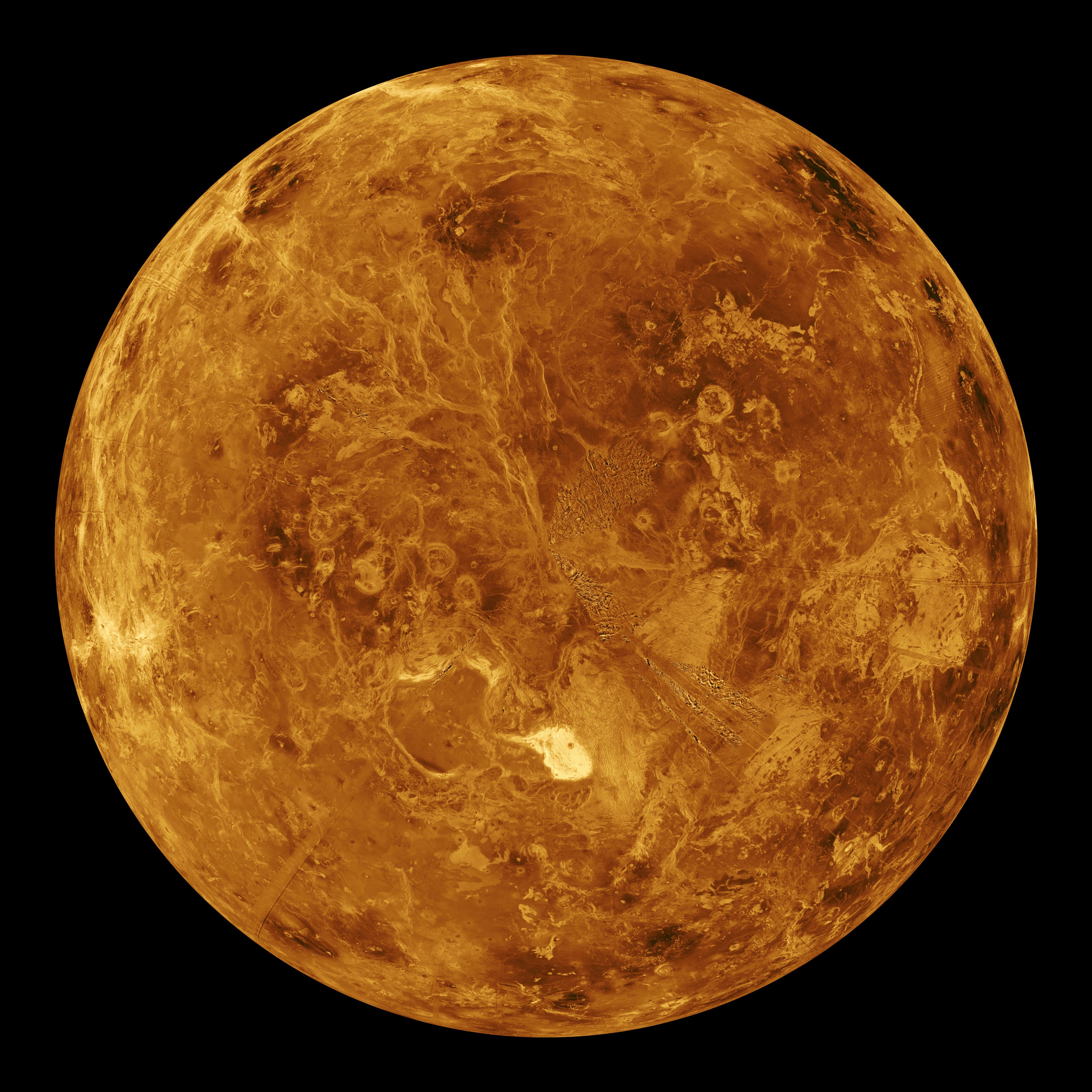
Venus is Earth's evil twin — nearly identical in size and composition, but with a runaway greenhouse effect that turned it into a pressure cooker. The surface is hot enough to melt lead, with an atmospheric pressure 92× Earth's sea level (the equivalent of being 900 meters underwater). The thick clouds of sulfuric acid make it permanently overcast.
Venus may have once looked much more like Earth — with oceans, moderate temperatures, and possibly even life. Something went catastrophically wrong about 700 million years ago. Understanding Venus is one of the most urgent questions in planetary science, because it shows us what Earth could become. Three major missions are heading there this decade: NASA's DAVINCI and VERITAS, and ESA's EnVision.
What we still don't know
Missions & Exploration
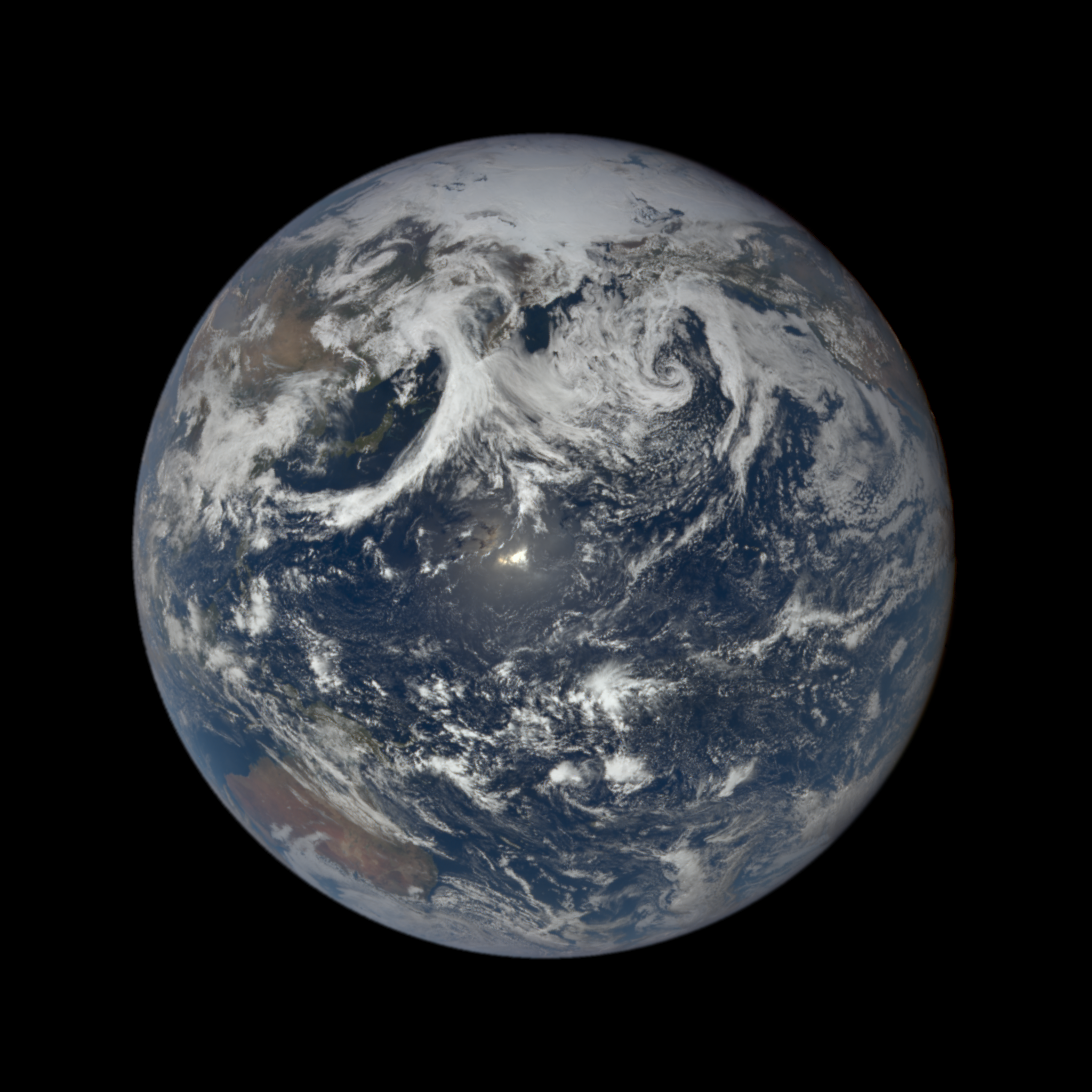
From space, Earth is clearly different — liquid water on the surface, a thin blue atmospheric haze, polar ice caps, and the constant churn of weather systems visible from orbit. It sits in what astronomers call the habitable zone — neither too close nor too far from the Sun for liquid water to exist. But "habitable zone" doesn't guarantee life. What makes Earth special goes deeper: a large stabilizing moon, plate tectonics that recycle carbon, and a magnetic field that shields the surface from solar radiation.
Earth's Moon is proportionally enormous — the largest moon relative to its planet in the inner solar system. The leading theory is that a Mars-sized object called Theia struck Earth about 4.5 billion years ago, and the debris coalesced into the Moon. That impact may also be why Earth has a fast rotation, which drives our weather and the magnetic field that makes life possible.
What we still don't know
Earth from space — current missions
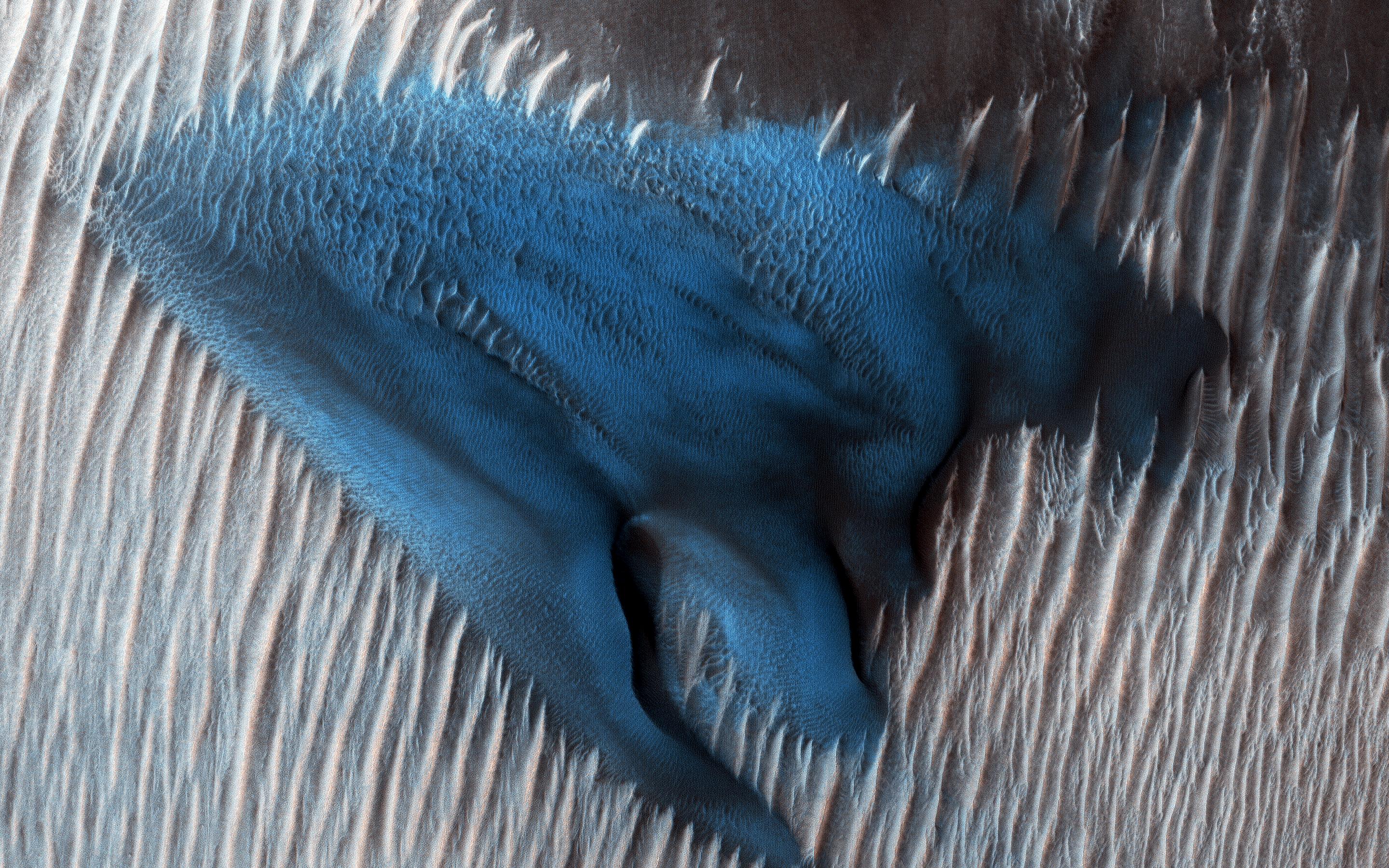
Mars is the most studied alien world in history — and the more we learn, the clearer it becomes that it was once more like Earth than it is today. Ancient riverbeds, lake basins, and delta fans photographed by orbiters tell the story of a warmer, wetter early Mars. The Perseverance rover is specifically hunting for signs of ancient microbial life in Jezero Crater, a 45-km wide lake that existed 3.5 billion years ago.
Mars has two tiny moons — Phobos and Deimos — which are almost certainly captured asteroids. Phobos orbits so close and fast that it rises in the west and sets in the east, completing an orbit in just 7 hours 39 minutes. It's also slowly spiraling inward. In about 50 million years, tidal forces will either pull it apart into a ring system or crash it into Mars.
What we still don't know
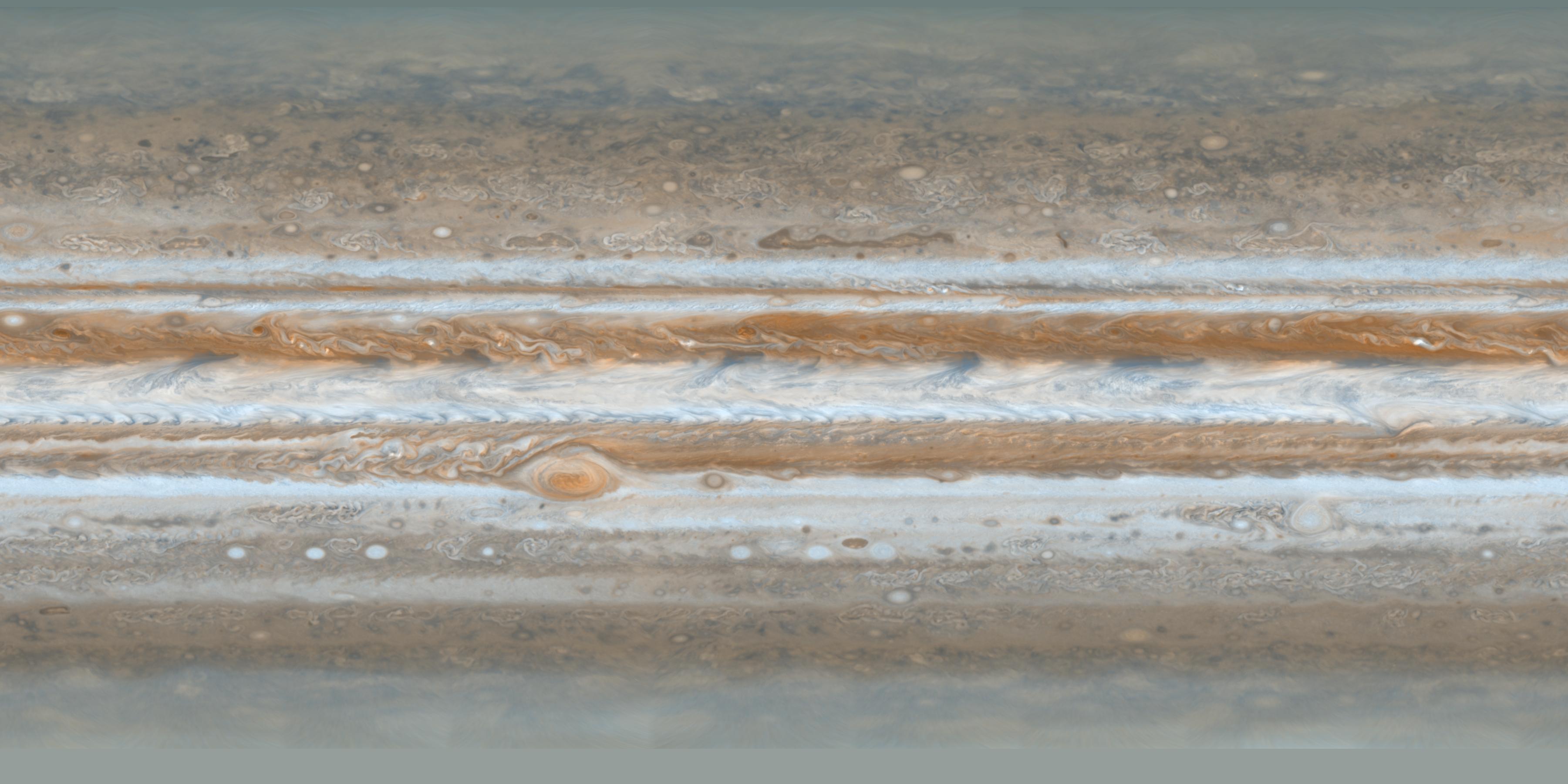
Jupiter is a failed star — if it had been about 80× more massive, it would have ignited as a brown dwarf or small star. Instead, it became the solar system's gravitational bouncer, its massive gravity helping to sculpt the inner solar system by deflecting comets and asteroids — some toward Earth, and many away from it. There's a real argument that Jupiter is partly why complex life could exist here.
The Great Red Spot is a storm wider than Earth that has been raging for at least 400 years. It's been shrinking — from 40,000 km wide in the 1800s to around 13,000 km today. Some models suggest it could disappear within the next few decades. What happens when a 400-year-old planetary storm ends is something no one has ever witnessed.
What we still don't know
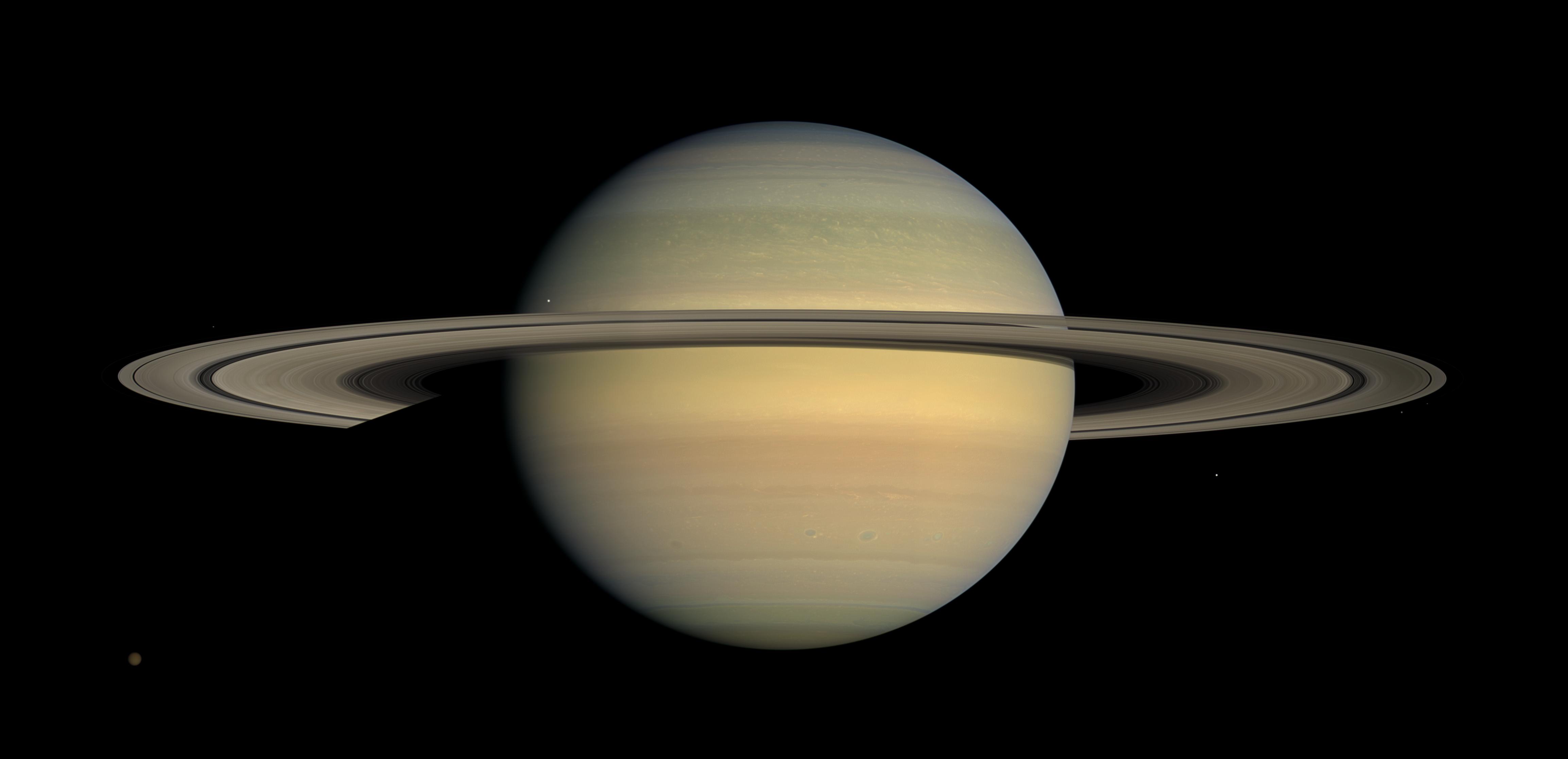
Saturn's rings are one of the most spectacular structures in the solar system — yet they're shockingly thin. Those rings, which span 280,000 km in diameter, are on average only 10–100 meters thick. They're made primarily of ice chunks ranging from grains to boulders. And they're surprisingly young — the Cassini mission determined they're only 100–400 million years old, which means dinosaurs were alive on Earth when Saturn got its rings.
Saturn's other moon Enceladus is actively venting geysers of water ice from its south pole — a subsurface ocean leaking into space through cracks in its icy crust. The Cassini probe flew through those plumes and detected organic molecules, hydrogen (an energy source for life), and silica — evidence of hydrothermal vents on the ocean floor. Enceladus is now considered one of the most promising targets in the search for extraterrestrial life.
What we still don't know
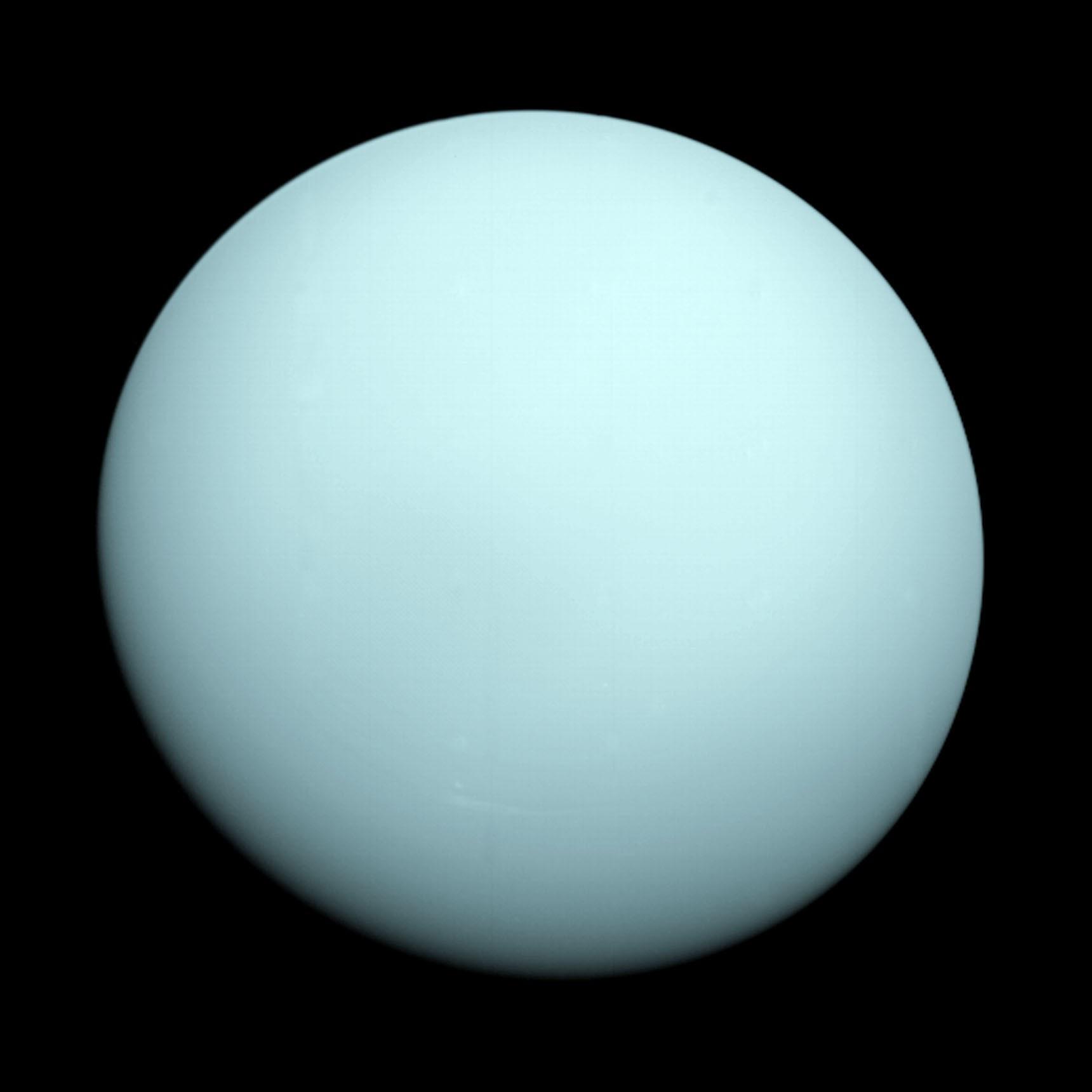
Uranus is the solar system's oddball. Its 98° axial tilt means it essentially rolls around the Sun on its side — one pole faces the Sun for 42 years straight, while the other pole sits in darkness for 42 years. The cause is almost certainly a massive ancient impact, though no one has identified what hit it. Despite being closer to the Sun than Neptune, it's actually colder — because it barely radiates any internal heat at all.
Uranus's moons are named after Shakespeare characters — Ariel, Umbriel, Titania, Oberon, Miranda. Miranda has the tallest known cliff in the solar system: Verona Rupes, up to 20 km high. An object dropped from its top would take about 10 minutes to hit the bottom. The moon itself looks like it was shattered and reassembled at some point, though by what and when is unknown.
What we still don't know
Missions & Exploration
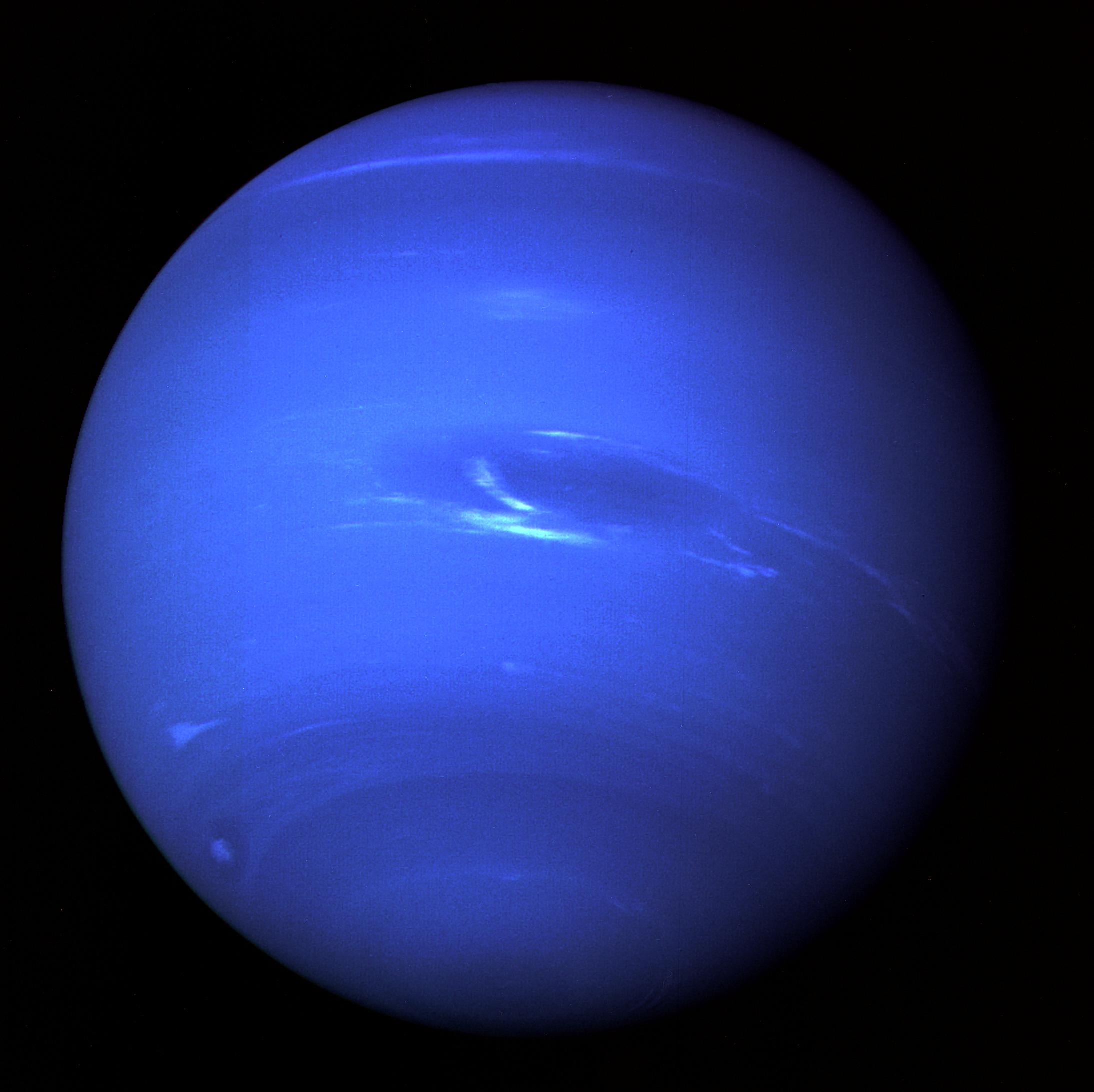
Neptune is so far from the Sun that it receives only 1/900th of the sunlight Earth does. Yet it has winds reaching 2,100 km/h — faster than any other planet. The energy driving those winds isn't solar. It comes from Neptune's interior, which radiates 2.6× more energy than it receives from the Sun. Nobody has fully explained the mechanism that converts internal heat into the most violent winds in the solar system.
Neptune has only been visited once — Voyager 2 spent about 6 hours making its closest approach in August 1989. Everything we know from direct observation comes from that brief encounter 35 years ago. A dedicated Neptune orbiter mission, which could answer fundamental questions about ice giant planets (possibly the most common planet type in the galaxy), has been repeatedly proposed but not yet approved or funded.
What we still don't know
Missions & Exploration
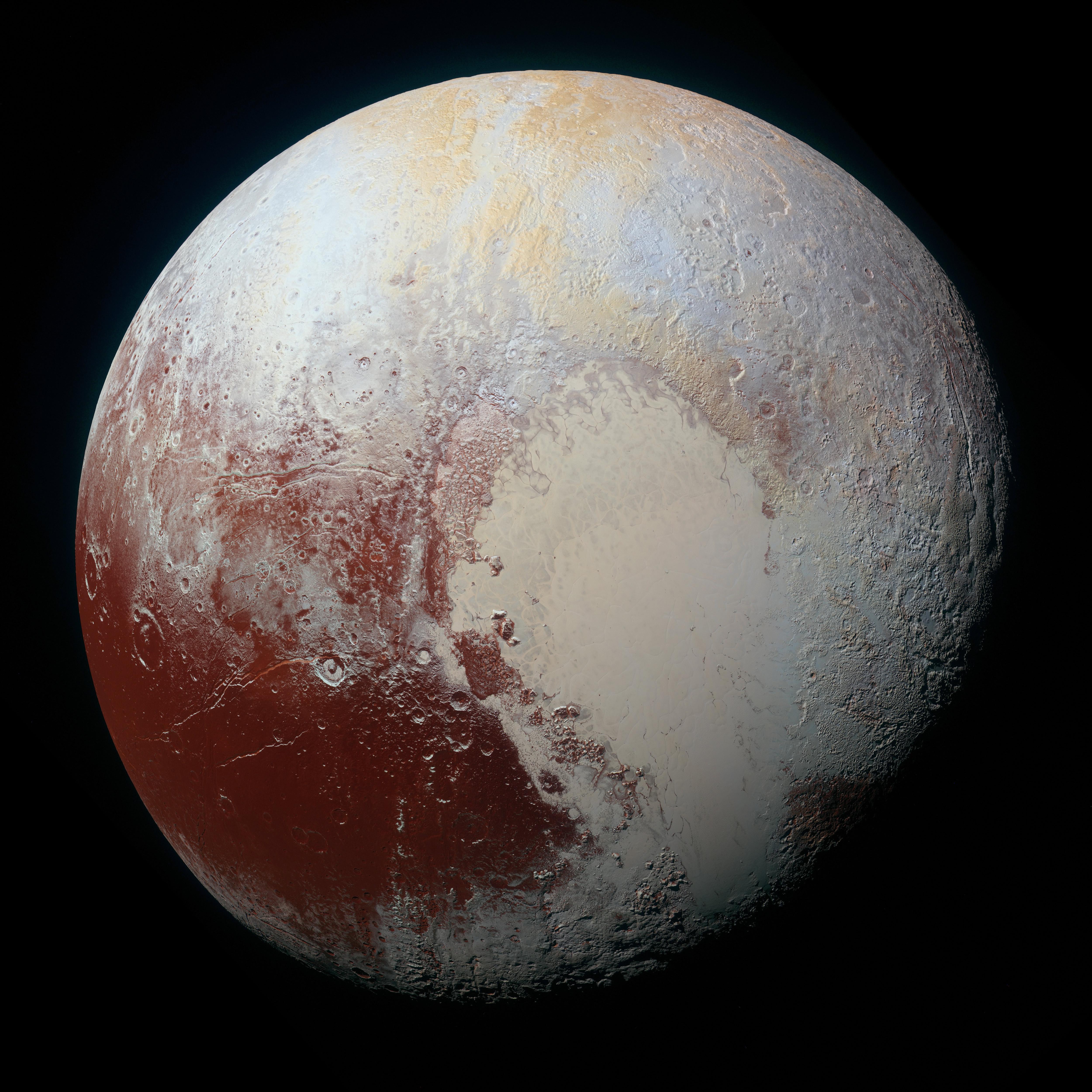
Before New Horizons flew past Pluto in July 2015, the best images we had were just a blurry smudge — a blob of pixels. No one expected what the probe found: towering water ice mountains 3.5 km high, a vast nitrogen glacier in the shape of a heart, a surprisingly young surface with no impact craters suggesting active geological processes, and a thin nitrogen atmosphere complete with haze layers.
Pluto may have a subsurface liquid water ocean kept warm by radioactive decay in its rocky core. The heart-shaped glacier (Tombaugh Regio) may be a massive convection cell of nitrogen ice slowly churning — which would explain why it shows no impact craters despite Pluto's location in the asteroid-rich Kuiper Belt. Pluto isn't dead. It's just very, very cold and very far away.
What we still don't know
Missions & Exploration
Beyond the Planets
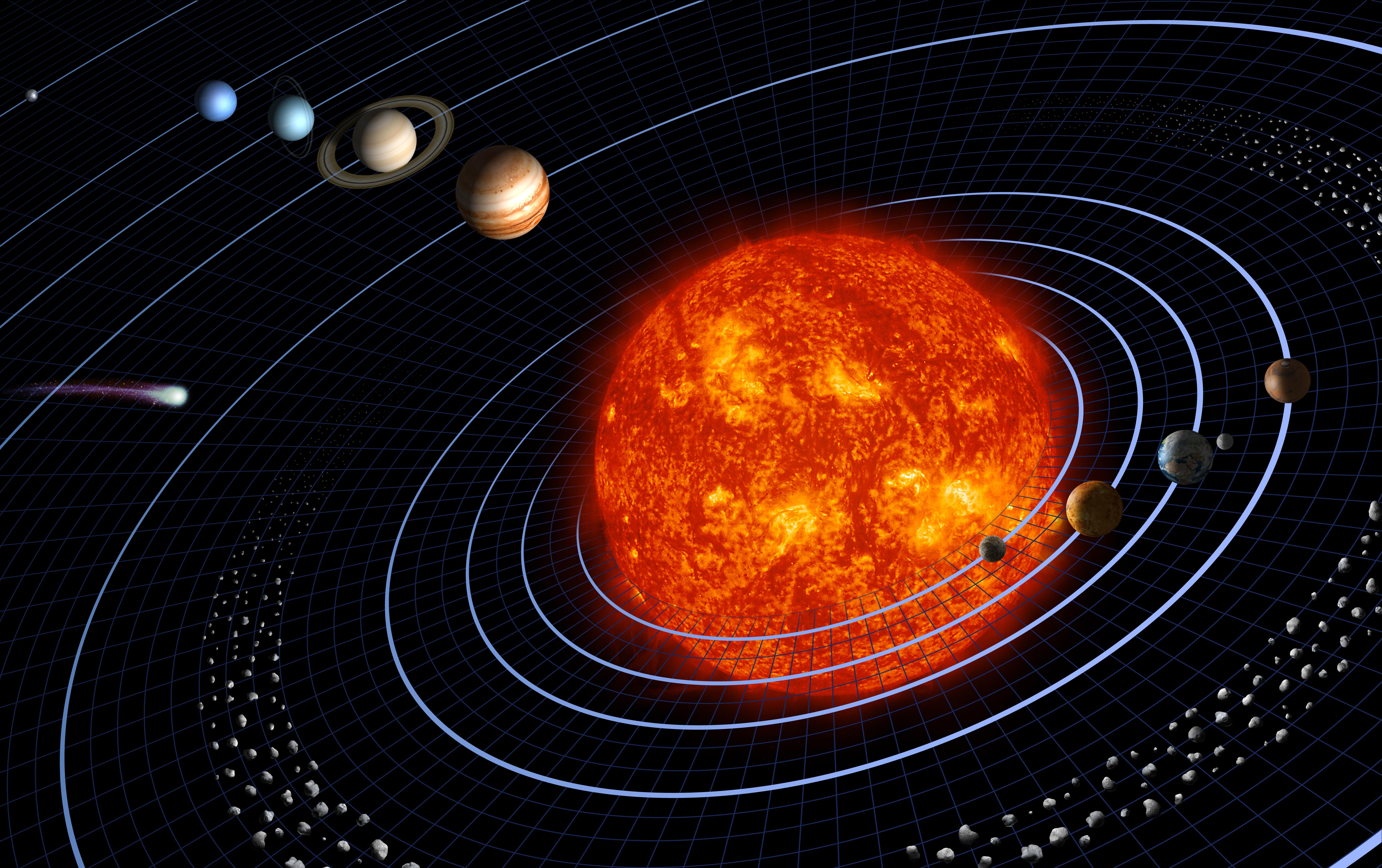
The solar system doesn't end at Neptune. The asteroid belt, Kuiper Belt, and Oort Cloud together contain trillions of objects — and the moons of the outer planets may be the most likely places in the solar system (after Earth) to find life.
☄️ Asteroid Belt (2–3.3 AU)
Millions of rocky and metallic objects between Mars and Jupiter — the rubble of a planet that never formed because Jupiter's gravity kept disrupting the process. Total mass is only about 4% of the Moon. Despite movie depictions, spacecraft cross it routinely without incident. NASA's Psyche mission is currently en route to a metallic asteroid that may be the exposed iron core of an ancient protoplanet.
🧊 Kuiper Belt (30–50 AU)
The outer edge of the solar system's known planetary region — a ring of icy bodies beyond Neptune's orbit. Pluto is the most famous, but there are hundreds of thousands of similar Kuiper Belt Objects. New Horizons visited Arrokoth (2019) — the most distant object ever explored up close, a contact binary that looks like a snowman — showing how planets formed by gently merging smaller bodies.

🌊 Ocean Worlds — The Real Targets
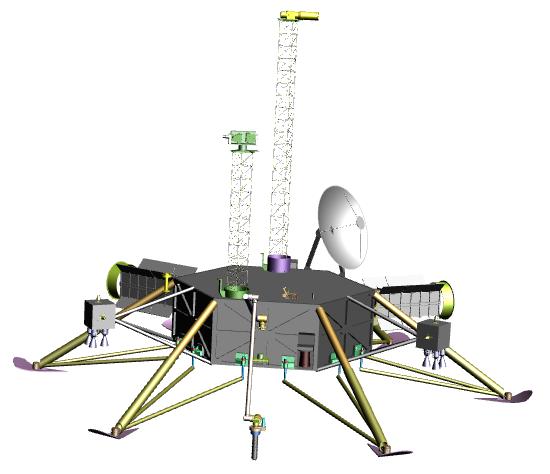
The moons with confirmed or suspected subsurface liquid water oceans now include: Europa (Jupiter), Enceladus (Saturn), Ganymede (Jupiter), Titan (Saturn — surface liquids), Callisto (Jupiter), and possibly Triton (Neptune) and Pluto. These ocean worlds may vastly outnumber habitable planet surfaces in the galaxy. Several missions are already heading there →
🌌 Oort Cloud (2,000–100,000 AU)
The theoretical outermost shell of the solar system — a vast sphere of icy bodies from which long-period comets originate. So distant it has never been directly observed and no spacecraft has reached it. The Voyager probes won't enter its inner edge for another 300 years. It extends roughly 25% of the distance to Proxima Centauri, the nearest star.
Ready to Go Deeper?
See which missions are active right now, what's launching in the next decade, or what lies beyond our solar system entirely.
Active Missions → Future Missions → Beyond the Solar System →